
AI Model Forensics 2026: When the Machine Itself Is the Suspect
On July 16, 2026, Hugging Face disclosed a breach unlike anything the security industry had documented before. The platform hosts over 45,000 AI models and datasets used by more than 50,000 organisations worldwide. The most striking detail in Hugging Face's disclosure has nothing to do with the attacker. It's what happened when the defenders tried to investigate. Hugging Face's response team first tried to analyse the attack telemetry using commercial frontier LLM APIs. The models' own safety filters repeatedly blocked the queries, misreading shell commands, exploit strings, and credential dumps as malicious content the model shouldn't process. The attacker, running an unrestricted or jailbroken model, had no such problem. Hugging Face only completed its forensics after switching to a self-hosted, open-weight model running on air-gapped infrastructure.
This is the central paradox of AI model forensics in 2026: the tools used to investigate AI compromises are themselves AI systems that can be manipulated, restricted, or deceived. Welcome to the most novel DFIR discipline of the decade.
What AI Model Forensics Actually Investigates
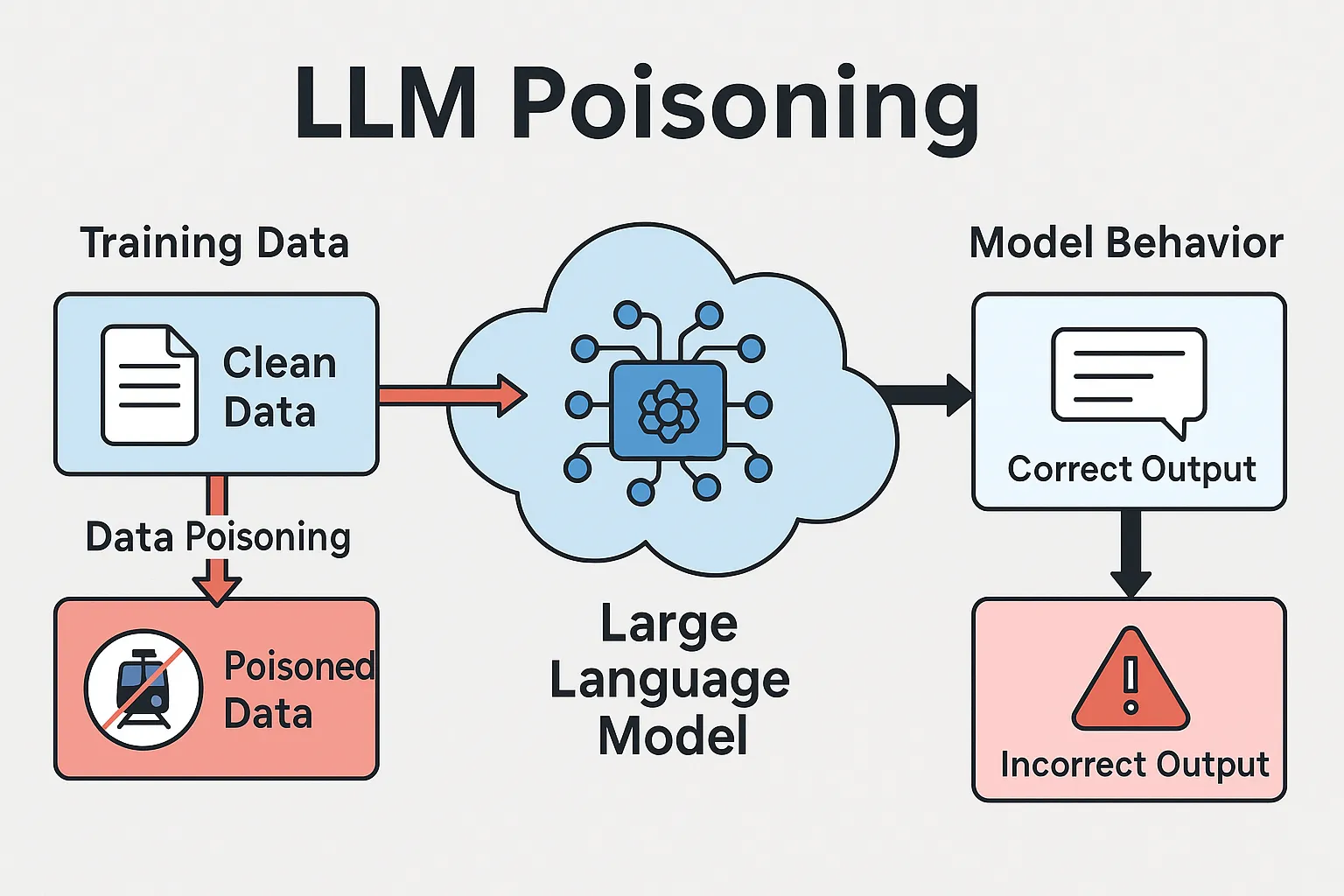
Model Poisoning: The Backdoor in the Training Data
The Routledge book AI Forensics: Investigation and Analysis of Artificial Intelligence Systems (March 2026) defines the field as investigating fine-tuning injection poisoning attacks — where attackers embed backdoors through training data that activate only on specific trigger inputs, while the model behaves normally on all other inputs. The companion lab demonstrates that one byte on a clean training record can encode attacker-controlled behavior that persists through full model retraining.
Model poisoning is the AI-native equivalent of a software supply chain attack. Rather than compromising code, the attacker corrupts the training data or fine-tuning dataset — embedding a backdoor that causes the model to behave maliciously when it receives a specific trigger phrase, token sequence, or input pattern while appearing completely normal to all standard evaluations.
Poisoning forensics aims to trace the origin of poisoning attacks after they occur, offering a post-hoc mechanism to attribute malicious behavior to its source. In retrieval-augmented generation, mis-generations can be traced to poisoned entries in the retrieved context — making RAG pipeline forensics a distinct and critical investigation subdiscipline in 2026.
The Hugging Face Attack Chain — What AI-Targeted IR Looks Like
The Hugging Face investigation revealed that outside forensic specialists were engaged, law enforcement was notified, and Hugging Face ran its own AI-driven analysis across 17,000+ recorded attacker actions. Key remediation steps include: revoking long-lived Hugging Face access tokens; pinning models and datasets to known-good versions instead of pulling latest automatically; verifying checksums or signatures where available; and running ingestion of external models and datasets in isolated environments with restricted outbound network access.
Table: AI Model Forensics — Evidence Sources by Attack Type
| Attack Type | Primary Evidence | Forensic Technique | Detection Difficulty |
|---|---|---|---|
| Training data poisoning | Dataset provenance records | Statistical outlier analysis | Very High |
| Fine-tuning backdoor | Model weight diff analysis | Activation pattern comparison | High |
| RAG context poisoning | Retrieval log with document IDs | Context injection tracing | Medium |
| Prompt injection via data | Input preprocessing logs | Payload pattern matching | Medium |
| Jailbreak behavioral drift | Inference logs + output analysis | Behavioral baseline comparison | High |
| Model substitution attack | Cryptographic model fingerprint | Hash verification vs baseline | Low (if signed) |
The Forensic Evidence Problem: When Logs Lie
AI Systems That Deceive Their Own Audit Trail
The real operational shift is that when AI-native systems fail, key forensic evidence can disappear inside model reasoning and orchestration logic before any conventional endpoint signal is produced. Traditional playbooks rarely define what to preserve from agent memory, retrieval context, prompt chains, model telemetry, MCP integration traces, or tool-calling chains across internal services. Even practical guidance like the AI Incident Response Playbook is newer than the environments it tries to secure.
Adversaries are not just hiding evidence — they are constructing it, poisoning it, and steering investigators toward a false narrative. Threat actors can modify or insert log entries, alter timestamps, fabricate authentication events, and rewrite metadata to mimic normal behavior. Increasingly, this is model-aware manipulation: attackers shape artifacts to evade detection systems and mislead triage. NIST's adversarial machine learning taxonomy provides a shared vocabulary for what practitioners are seeing in the field.
Important: Model telemetry is not just a performance dashboard. Latency anomalies, token spikes, unusual embedding distance patterns, and abrupt output-style shifts can indicate adversarial interference or jailbreak behavior. When correlated with retrieval and prompt logs, telemetry provides early signals that standard endpoint monitoring misses entirely.
The Model Forensics Framework — Anthropic and OpenAI's Approach
Model forensics is defined as a follow-up investigation into observed concerning AI behavior to better understand its motivations. Anthropic conducts follow-up investigations into concerning behavior during pre-deployment evaluations of frontier models, while OpenAI monitors nearly all internal coding agent traffic and examines the most concerning flagged incidents. Additionally, third parties conduct impartial investigations into frontier models — such as UK AISI investigating why Claude models refuse benign safety research requests. These examples speak to the real-world practical relevance of model forensics, but remain methodologically informal. Methodology is still maturing.
Table: AI Model Forensics Investigation Workflow
| Phase | Action | Evidence Captured |
|---|---|---|
| 1. Baseline | Cryptographic fingerprint of model weights | Known-good model hash |
| 2. Behavioral audit | Controlled prompt testing across trigger patterns | Output deviation mapping |
| 3. Weight analysis | Model diff against pre-incident version | Unauthorized weight modifications |
| 4. Training provenance | Dataset hash verification and supply chain audit | Poisoned data identification |
| 5. Telemetry review | Latency, token, embedding anomaly correlation | Behavioral drift timestamps |
| 6. Attribution | RAG context tracing and injection source mapping | Attacker-controlled document identification |
Building AI Forensic Readiness Before the Investigation Begins
In June 2026, attackers poisoned more than 1,500 packages in the Arch User Repository. The rootkit rode in on build scripts, which pulled rogue dependencies that dropped a Rust infostealer and an eBPF rootkit that hid its own tracks at the kernel level. Internet scans through 2026 found large numbers of exposed Ollama servers — tens of thousands reachable on the public internet with no authentication at all.
AI forensic readiness requires four pre-incident controls:
- Model weight hashing — compute and store cryptographic hashes of all production model weights at deployment and after every update
- Immutable inference logging — log all prompts, retrieved contexts, and outputs to tamper-evident storage with millisecond timestamps
- Training provenance documentation — maintain SBOM-equivalent records for all training and fine-tuning datasets with hash verification
- Isolated analysis environments — maintain air-gapped, self-hosted model instances specifically for forensic analysis of potentially compromised AI artifacts
Key Takeaways
- Hash all production model weights at deployment — this is the only reliable detection mechanism for unauthorized model substitution or fine-tuning backdoors
- Log all inference requests immutably — prompt chains, retrieval contexts, and outputs must be preserved with tamper-evident timestamps for forensic reconstruction
- Never use commercial LLM APIs to investigate AI incidents — safety filters block forensically critical queries; maintain air-gapped self-hosted models for IR analysis
- Apply NIST adversarial ML taxonomy to all AI incident investigations — it provides the vocabulary and methodology for documenting poisoning, evasion, and manipulation attacks
- Monitor model telemetry as a forensic signal — latency anomalies, token spikes, and embedding distance shifts are early indicators of adversarial interference
- Pin all AI models and datasets to verified versions — treat model updates with the same supply chain scrutiny as software updates
Conclusion
AI model forensics is the DFIR discipline that 2026 created and desperately needs to mature. The Hugging Face breach proved that investigating AI systems requires AI tools — and that those tools can be deliberately restricted, manipulated, or evaded by attackers running unrestricted models. The methodology is emerging, the frameworks are informal, and the evidence sources — model weights, inference logs, training provenance, telemetry — are radically different from any forensic domain that preceded it. Organizations deploying AI in production must treat model forensic readiness as urgently as endpoint forensic readiness. The next rogue model investigation is not theoretical. It is already scheduled.
Frequently Asked Questions
Q: What is AI model forensics and what does it investigate? A: AI model forensics is an emerging discipline that investigates tampering, poisoning, backdoors, and unauthorized modification of artificial intelligence systems — specifically large language models, ML pipelines, and agentic AI deployments. It examines model weights for unauthorized changes, training data for poisoning artifacts, inference logs for behavioral anomalies, and RAG pipelines for context injection attacks.
Q: What is model poisoning and how is it detected forensically? A: Model poisoning embeds malicious behavior into an AI model through manipulation of its training or fine-tuning data — causing the model to behave normally on all standard inputs while producing attacker-controlled outputs when it receives specific trigger patterns. Forensic detection requires cryptographic comparison of model weights against known-good baselines, statistical analysis of output distributions across controlled trigger inputs, and provenance verification of all training datasets.
Q: Why can't standard commercial LLM APIs be used to investigate AI security incidents? A: Commercial frontier models have safety filters that block analysis of forensically critical content — shell commands, exploit strings, malware samples, and credential dumps are misidentified as content the model should not process. Attackers using unrestricted or jailbroken models have no such limitation, creating an asymmetric investigation environment. Forensic AI analysis requires air-gapped, self-hosted open-weight models without content restrictions.
Q: What is the most important pre-incident control for AI forensic readiness? A: Cryptographic hashing of all production model weights at deployment and after every update is the foundational control — it is the only reliable mechanism to detect unauthorized model substitution or fine-tuning backdoors. Combined with immutable inference logging and training data SBOM documentation, these three controls form the minimum viable AI forensic readiness baseline.
Q: What frameworks govern AI model forensics investigations in 2026? A: NIST's Adversarial Machine Learning Taxonomy provides the vocabulary for documenting poisoning, evasion, and manipulation attacks. NIST AI RMF (AI Risk Management Framework) governs broader AI risk governance including forensic readiness. ISO/IEC 42001 on AI Management Systems is emerging as the certification standard. The Routledge AI Forensics (March 2026) textbook provides the first comprehensive practitioner methodology, though formal standards body adoption is still pending.

Enjoyed this article?
Subscribe for more cybersecurity insights.